1. Introduction
The question “what businesses can impact policy” is more important today than ever before. In modern economies, businesses are not just producers of goods and services; they are powerful stakeholders that help shape laws, regulations, and national priorities. When we ask what businesses can impact policy, we are exploring how companies of different sizes and industries influence government decisions that affect society.
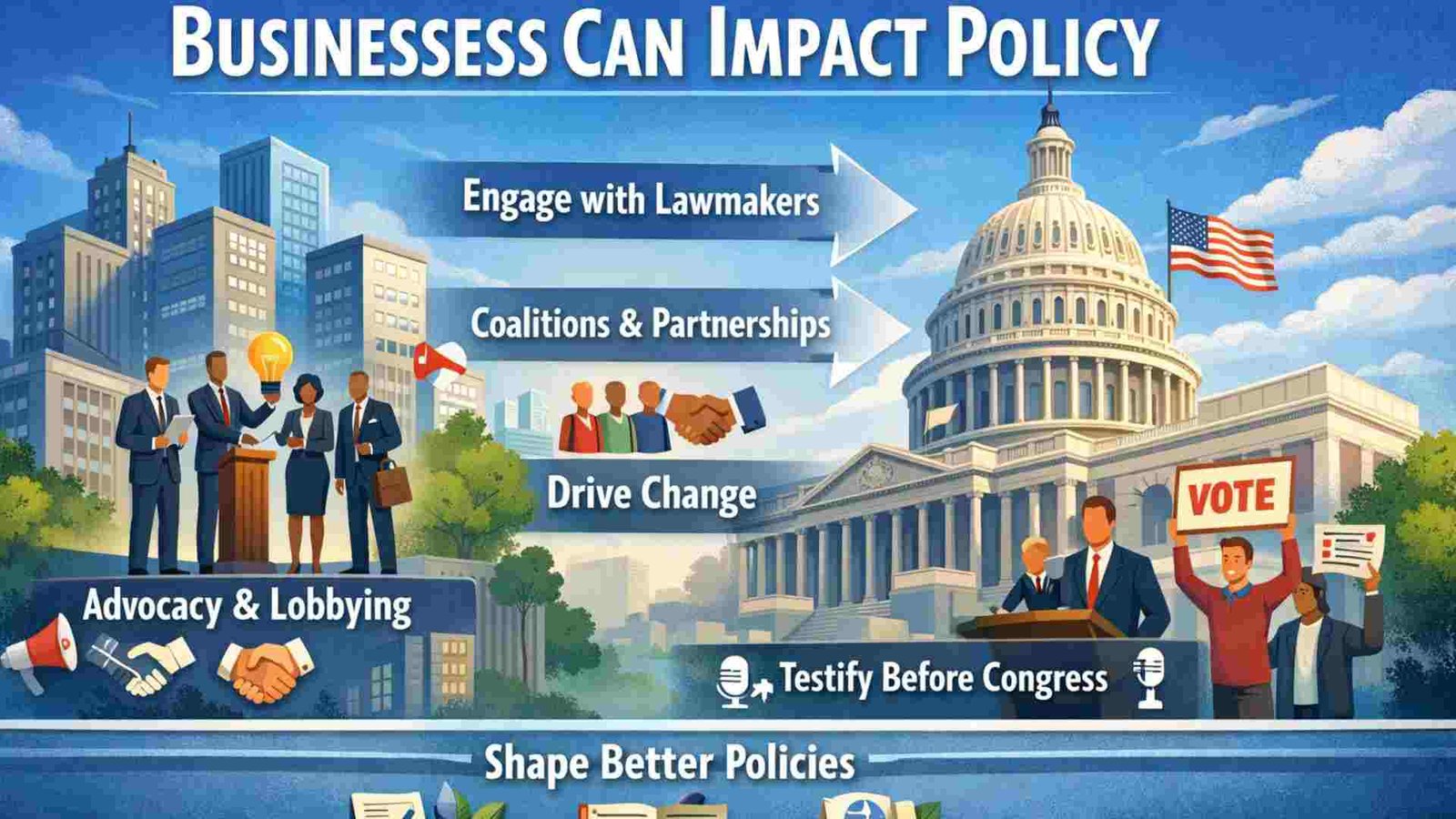
Public policy includes laws, regulations, tax rules, environmental standards, labor laws, and trade agreements. These policies directly affect how businesses operate, grow, and compete. Because of this connection, many companies actively participate in the policymaking process. They do so through various mechanisms such as lobbying, advocacy campaigns, corporate social responsibility (CSR) initiatives, and strategic partnerships with governments or nonprofit organizations.
Understanding what businesses can impact policy helps citizens, entrepreneurs, and policymakers recognize the dynamic relationship between the private sector and public institutions. This relationship can lead to economic growth and innovation, but it also raises important ethical and governance questions.
2. Why Businesses Seek to Influence Policy?
To understand what businesses can impact policy, we must first understand why they seek to influence it. Public policy acts as a framework that determines how markets function. Tax rates, import duties, safety standards, labor laws, and environmental regulations all directly affect business operations.
For businesses, policy is not just a legal requirement; it is a strategic factor. A favorable tax structure can encourage expansion, while strict regulations may increase operational costs. Companies often engage with policymakers to ensure that new laws are practical, balanced, and supportive of economic growth. For example, a technology company may advocate for flexible data rules that allow innovation while protecting consumers.
Policy can also create opportunities. Government incentives for renewable energy can boost investment in solar and wind industries. Infrastructure spending can open doors for construction and engineering firms. On the other hand, unexpected regulatory changes can disrupt supply chains or reduce profits.
In competitive markets, businesses seek stability and predictability. By influencing policy discussions early, companies aim to reduce uncertainty and shape a regulatory environment that supports long-term growth and innovation.
3. Mechanisms: How Businesses Impact Policy
When examining what businesses can impact policy, it is essential to understand the mechanisms they use. These mechanisms vary depending on the industry, size of the company, and political environment.
3.1 Direct Lobbying
Direct lobbying is one of the most visible ways businesses influence policy. In this process, corporations hire representatives or lobbyists to communicate directly with lawmakers and government officials. These representatives provide information, research, and recommendations about proposed legislation.
Industries such as energy and technology are known for strong lobbying efforts. Energy companies often engage in discussions about environmental standards and subsidies, while tech firms focus on data privacy and digital regulation. Lobbying allows businesses to present their perspective and technical expertise to policymakers who may not fully understand industry complexities.
Although lobbying is a legal and regulated activity in many countries, it remains controversial because of concerns about unequal access and influence.
3.2 Political Contributions and Campaign Support
Another way businesses impact policy is through political contributions and campaign support. Companies and their executives may donate to political candidates or parties whose views align with their policy preferences.
Campaign financing can strengthen relationships between businesses and elected officials. Once in office, these officials may prioritize issues important to their supporters. While this practice is legal in many democracies, it raises questions about fairness and whether financial power leads to policy advantages.
Political contributions are often regulated, but the scale of corporate donations continues to shape political debates and legislative outcomes.
3.3 Business Associations & Trade Groups
Businesses often join associations or trade groups to amplify their voice. Organizations such as chambers of commerce or industry-specific groups represent collective interests. When businesses act together, their influence becomes stronger and more organized.
Trade groups conduct research, draft policy recommendations, and meet with government representatives. By presenting a unified position, they can shape discussions on trade policy, taxation, and industry standards. This collective approach allows smaller companies to participate in policy influence alongside larger corporations.
3.4 Participation in Advisory Committees & Regulatory Panels
Governments frequently invite industry experts to join advisory committees or regulatory panels. Through these roles, business leaders help interpret laws and suggest technical adjustments.
Participation in these bodies provides companies with direct input into rulemaking processes. Their expertise ensures that regulations are realistic and aligned with industry practices. However, it also creates concerns about regulatory capture, where regulators may become too influenced by the industries they oversee.
3.5 Grassroots Mobilization & Public Relations
Businesses also use public relations and grassroots campaigns to shape public opinion. By encouraging employees, customers, and stakeholders to advocate for certain policies, companies can create public pressure on lawmakers.
Media campaigns, advertisements and social media outreach help businesses communicate their policy positions. When public support grows, policymakers may feel motivated to adopt favorable legislation.
4. Types of Businesses That Impact Policy
If we ask what businesses can impact policy, the answer includes a wide range of industries. Some sectors are especially influential because of their economic importance or regulatory exposure.
4.1 Energy & Fossil Fuel Industries
Energy companies play a major role in environmental and economic policy. Decisions about climate change, carbon emissions, and subsidies directly affect oil, gas, and renewable energy firms. Because of high financial stakes, these industries invest heavily in policy discussions and advocacy.
4.2 Technology & Big Tech Corporations
Technology companies influence debates on data privacy, artificial intelligence, digital taxation, and cybersecurity. As digital platforms shape daily life, governments rely on tech companies for expertise. This gives the tech sector significant influence over digital policy frameworks.
4.3 Pharmaceutical & Health Products Sector
Pharmaceutical firms impact policies related to drug pricing, patent protection, and healthcare systems. Research and development costs, public health goals, and insurance systems all intersect with government regulation. As a result, this sector actively engages with policymakers.
4.4 Insurance, Finance & Banking Sector
Banks and financial institutions influence monetary policy, financial regulations, and tax laws. After global financial crises, regulatory reforms often involve extensive consultation with financial experts. This sector’s role in economic stability makes it a powerful policy stakeholder.
4.5 Business Associations and Collective Platforms
Collective platforms such as national business roundtables or chambers of commerce coordinate policy positions across industries. These organizations often publish policy papers and meet regularly with government officials, reinforcing their role in shaping legislation.
5. Key Strategies Businesses Use to Influence Policy
Beyond formal mechanisms, businesses apply strategic approaches to shape policy outcomes. Evidence-based research is a common strategy. Companies fund studies, publish white papers, and collaborate with think tanks to support their policy proposals with data.
Corporate Social Responsibility (CSR) also plays a growing role. By aligning with social and environmental goals, businesses build public trust and credibility. Policymakers may view socially responsible companies as reliable partners in developing new regulations.
Economic arguments are particularly persuasive. When businesses demonstrate how certain policies can create jobs, boost GDP, or attract investment, governments are more likely to listen. Partnerships with NGOs and advocacy groups further strengthen influence by combining business resources with social legitimacy.
6. Case Studies: Where Businesses Have Impacted Policy?
Real-world examples help explain what businesses can impact policy in practice.
6.1 Environmental Policy and Corporate Action
Business coalitions have both supported and opposed climate policies. Some major corporations now advocate for carbon pricing and renewable energy investment, recognizing long-term sustainability benefits. Others have resisted stricter environmental regulations due to cost concerns.
6.2 Data Privacy & Tech Regulation
Technology firms have shaped digital privacy laws by engaging in consultations and proposing self-regulation frameworks. Their technical expertise often influences how governments design cybersecurity and data protection standards.
6.3 Tax Reform Initiatives
Business organizations frequently advocate for corporate tax reductions to increase competitiveness. In several countries, tax reforms have followed strong lobbying and research campaigns from industry groups seeking lower tax burdens.
7. Benefits and Consequences of Business Policy Influence
Understanding what businesses can impact policy requires examining both positive and negative outcomes.
7.1 Positive Effects
Business involvement can encourage innovation, economic growth, and job creation. Industry expertise helps lawmakers design practical regulations that support technological advancement and global competitiveness.
7.2 Negative Outcomes
However, excessive influence may lead to policy bias. When powerful corporations dominate discussions, smaller businesses and citizens may feel excluded. Conflicts between public interest and corporate profit can weaken trust in democratic systems.
8. The Role of Ethics in Business Influence
Ethics play a central role when discussing what businesses can impact policy. Transparency in lobbying, disclosure of political contributions, and fair access to policymakers are essential for maintaining public trust.
Companies must balance profit goals with social responsibility. Ethical engagement means presenting accurate information, respecting democratic processes, and avoiding undue pressure. Strong governance systems and regulatory oversight help ensure that business participation benefits society as a whole.
9. Future Trends: How Businesses Will Continue to Influence Policy?
In the future, digital platforms will expand business advocacy tools. Social media allows companies to communicate policy positions directly to millions of people. Brand activism is also rising, as consumers expect companies to take positions on social and environmental issues.
Global economic shifts and industries such as artificial intelligence will create new policy challenges. As innovation accelerates, governments will increasingly rely on business expertise. This trend suggests that understanding what businesses can impact policy will remain crucial in the years ahead.
Comparison Table: Business Influence Mechanisms
| Mechanism | Main Purpose | Example Outcome |
| Direct Lobbying | Shape specific legislation | Adjusted regulatory standards |
| Political Contributions | Support aligned candidates | Favorable tax policies |
| Trade Associations | Unified industry voice | Industry-wide reforms |
| Advisory Panels | Provide technical expertise | Practical rule adjustments |
| PR & Grassroots Campaigns | Influence public opinion | Increased support for reforms |
FAQ’s
1. Can small businesses impact policy, or only large corporations?
Small businesses can impact policy, especially through trade associations and local chambers of commerce. Collective action increases their influence.
2. Is business lobbying always legal?
In most democracies, lobbying is legal but regulated. Companies must follow transparency and reporting rules.
3. How do consumers influence business policy actions?
Consumers can pressure companies through purchasing choices and social campaigns, encouraging them to support certain policies.
4. Do international businesses impact global policy?
Yes, multinational corporations often influence trade agreements and international regulations through global forums.
5. How can governments ensure fair policy influence?
Governments can enforce transparency laws, limit campaign financing, and ensure equal access to policymakers.
10. Conclusion
The question of what businesses can impact policy reveals the deep connection between economic power and political decision-making. From energy and technology to finance and healthcare, many industries actively shape laws through lobbying, research, advocacy, and partnerships.
Business influence can support innovation and growth, but it must be balanced with ethical responsibility and transparency. By understanding this relationship, citizens and policymakers can promote a fair system where business participation strengthens rather than weakens democratic governance.